
By the Omozing Credit Team, which includes IIT and IIM alumni · Updated October 2026 · 6-minute read
What a low score means, in one paragraph
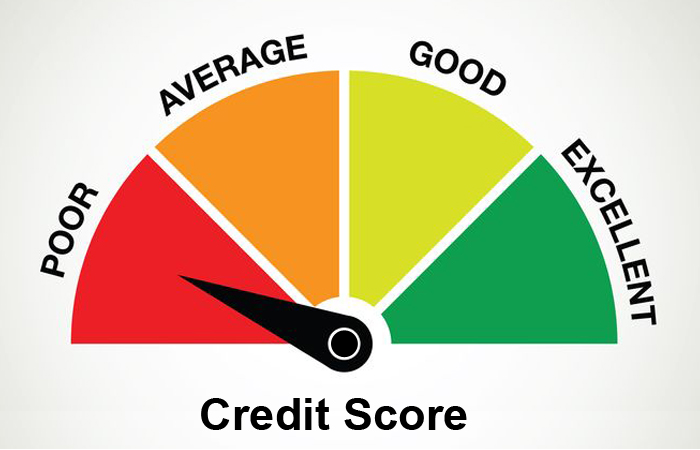
CIBIL scores run from 300 to 900. Below roughly 700, many banks get cautious; below 600, most unsecured lenders say no. A low score does not mean you are a defaulter. It means your report shows patterns lenders associate with risk. For the full picture, see what a low CIBIL score means; for a complete 11-point diagnosis, use our low CIBIL score checklist. This page is the short version: the five reasons we see most often in salaried applicants.
The top 5 reasons
1. EMI date before salary day
The auto-debit runs on the 2nd, salary lands on the 5th. One bounce becomes a reported delay.
2. Cards near the limit
High statement balances push utilisation up, even if you pay in full later.
3. App-loan stacking
Three or four small app loans to bridge month-end look like cash-flow stress.
4. Too many applications
Clicking every “pre-approved” offer adds hard enquiries fast.
5. Unchecked old problems
A closed loan still open, a guaranteed loan gone bad, or an outright error.
1. Your EMI date and salary day don’t line up
An illustrative profile, not a real customer: Karthik, a software engineer in Bengaluru, switched jobs. His old employer paid on the last working day; the new one pays on the 5th. His personal loan EMI still debits on the 2nd. In month one, the debit bounced, he paid a few days later, and the lender reported the account as past due.
How a job switch creates a “late payment”
Illustrative. Whether a short delay is reported, and how, depends on the lender and the reporting date; the safe assumption is that any missed debit can appear on your report.
Fix: ask every lender to move your EMI dates to two or three days after salary credit, and keep one month’s EMIs as a buffer in your salary account.
2. Your credit cards run close to the limit
Illustrative: Meera, a marketing manager in Mumbai, puts ₹90,000 a month on a card with a ₹1,00,000 limit for the rewards, and pays in full. She never pays interest, but every statement shows 90% utilisation. Lenders and bureaus commonly treat anything above about 30% as a warning sign.
Fix: pay part of the bill before the statement date, spread spending across cards, or ask for a higher limit and keep spending the same.
3. A stack of small app loans
Illustrative: Arjun, an operations executive in Gurugram, takes a ₹15,000 app loan for a month-end gap, then another to repay it, then a third. None is late yet, but his report now shows several short-term personal loans in a few weeks. Lenders read that as stress. And with fees of around 10% per rollover plus daily interest, one tight month can turn into a missed payment.
Fix: stop taking new ones and consolidate. SmartSwitch replaces several app loans with one Omozing EMI, paid into your own account so you close each app loan yourself within about 7 days. Read more on the real cost of payday loans.
4. Too many applications
Every pre-approved offer, card upgrade and loan you apply for can trigger a hard enquiry. Five in a month tells lenders you are hunting for credit, even if you were only comparing.
Fix: pause applications for a few months. Check your own score as often as you like; that is a soft enquiry and does not count.
5. Old problems nobody checked
Common in salaried professionals who have moved cities or jobs: a loan closed years ago still showing a small balance, a credit card cancelled with a ₹300 annual fee left unpaid, or a loan you guaranteed for a relative that has gone overdue.
Fix: pull your full report from each bureau (one free full report per bureau each year), and dispute errors through the CIBIL dispute process. Clear small genuine dues and collect the NOC.
The fix list on one page
| Reason | First action | When you might see a change |
|---|---|---|
| EMI before salary day | Move EMI dates; keep a buffer | Stops new damage now; old delays fade over months |
| Cards near the limit | Pay down before statement date | Often within one or two reporting cycles |
| App-loan stacking | Consolidate into one EMI | Once the app loans show as closed |
| Too many applications | Pause new applications | Enquiry effect fades over the following months |
| Old problems | Dispute errors; clear small dues | After the bureau and lender update |
Indicative timings, not promises. Your score depends on your whole report.
Salaried, with a score from 600?
Omozing’s credit officers read your full report, not just the number. Take-home ₹40,000+, two documents, rates from 11% a year.
Frequently asked questions
What does a low CIBIL score mean?
It means your credit report shows patterns lenders associate with higher risk, such as late payments or heavy use of credit. You may face more rejections and costlier offers. It does not mean you are on a blacklist.
Why is my credit score low when I have never missed a payment?
Usually because of high credit card utilisation, many recent applications, several small loans, or an error on your report. Check each of these on your full report.
Does a high salary give me a high credit score?
No. Income is not part of the score. Lenders check your salary separately, but the score only reflects how you have handled credit.
Can one late EMI lower my score?
Yes. Payment history matters most, so even one reported delay can pull a score down. Its effect fades as you add on-time payments.
How fast can I fix a low score?
Errors and high card balances can be fixed within one or two reporting cycles. Late payments take months of clean history to outweigh.
Omozing is the digital lending brand of Aparampaar Finance Private Limited, an RBI-registered non-deposit-taking NBFC. Loans are subject to credit assessment. See our regulatory disclosures and grievance redressal process.