
By the Omozing Credit Team · Updated October 2026 · 8-minute read
The CIBIL score range, and what counts as “good”
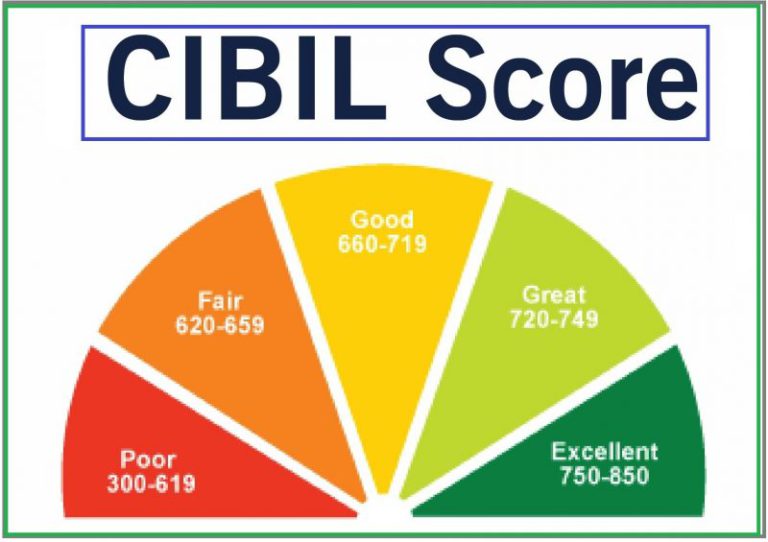
Your CIBIL score is a three-digit number from 300 to 900, calculated by TransUnion CIBIL from the loan and card data that banks and NBFCs report to it. The highest possible score is 900. The other three bureaus, Experian, Equifax and CRIF High Mark, use the same 300 to 900 range with their own models.
| Score | How most lenders read it | What it usually means for you |
|---|---|---|
| 750–900 | Excellent | Widest choice of lenders and the best rates on offer |
| 700–749 | Good | Approvals are common; rates may be a little higher |
| 650–699 | Fair | More checks; some lenders say no |
| 600–649 | Below average | Selective lenders; full report matters |
| 300–599 | Poor | Mostly secured credit until the score recovers |
| NA or NH | No or too little history | Not a bad score; you need to build a record |
A general guide, not an official bureau scale. Each lender sets its own cut-offs. So yes, a 795 or a 769 is a very good score; a 753 is good too, just above the 750 line many lenders use.
The factors that create a good score
CIBIL does not publish an exact formula, and no outsider knows the precise weights. But the bureau, lenders and credit educators agree on which factors matter and roughly how much. Here is their relative importance.
What drives your CIBIL score
Indicative relative importance only. Bureaus do not publish exact weights, and the impact of each factor depends on the rest of your report. Negative remarks such as settled or written off are part of payment history and weigh very heavily.
1. Payment history: the foundation
Every month, each lender reports whether you paid on time or how many days you were late (days past due, or DPD). A long run of “000” entries is the single strongest signal of a good borrower. One 30-day delay is a noticeable dent; a 90-day delay, a settlement or a write-off is serious and stays visible for years.
2. Credit utilisation: how much of your limit you use
If your card limits total ₹2,00,000 and your statements show ₹1,40,000 outstanding, your utilisation is 70%. That reads as stretched, even if you pay in full. Keeping reported balances under about 30% of limits is a widely used guide. Because it is recalculated every month, this is the factor you can improve fastest.
3. Length of credit history
Lenders like to see how you behave over years, not months. The age of your oldest account and the average age of all accounts both count. That is why closing your oldest credit card can hurt.
4. Credit mix
A healthy profile usually has both secured or instalment credit (a home, vehicle or personal loan) and revolving credit (a credit card), each handled well. A file made up only of several small unsecured loans reads as riskier.
5. New applications and enquiries
Each time you apply for credit, the lender’s check is recorded as a hard enquiry. A few over a year is normal. Several in a month suggests you are being turned down or are short of cash. Checking your own score is a soft enquiry and doesn’t count. More in does taking multiple loans affect your score?
Habits of people with 750+ scores
Autopay on everything
Every EMI and at least the card minimum due goes out automatically, with a buffer in the account.
Cards paid before the statement
Reported balances stay low, so utilisation looks healthy every month.
Old cards kept open
Lightly used, no annual-fee pain, quietly lengthening their history.
Applications spaced out
They borrow when they need to, from a lender whose criteria they meet, not ten at once.
Reports checked yearly
They use their free annual report from each bureau and dispute errors promptly.
No settlements
If they hit trouble, they talk to the lender early instead of settling for less.
What quietly pulls a score down
- A small forgotten overdue on an old card or a closed phone loan.
- Loans you guaranteed or co-signed for someone else who then paid late.
- Closed loans that the lender never updated as closed. Fix these through a CIBIL dispute.
- A string of short-term loan-app loans, each a new account and a new enquiry. If you are juggling several, SmartSwitch can combine them into one EMI.
- Bounced EMI payments, even if paid a few days later. See how a cheque or NACH bounce affects your CIBIL.
For the full list, read 11 factors that lead to a low CIBIL score.
What a good score gets you
A higher score generally means more lenders willing to say yes, faster decisions, larger amounts and better pricing. It also gives you bargaining power: you can ask your existing lender to match a better offer. But a score is not the only thing lenders check. Income, stability and existing EMIs matter too, which is why even a high score can occasionally meet a no.
If your score isn’t there yet
You don’t need a 750 to borrow sensibly. Omozing, the digital lending brand of RBI-registered NBFC Aparampaar Finance, considers salaried applicants with a credit score from 600 and a take-home salary of ₹40,000 or more. A credit officer reads your full report, so a recovering history is judged on its recent months, not just the number. Rates start from 11% a year, and the exact rate, fees and APR are in your Key Fact Statement before you sign. If you would rather raise your score first, our Credit Score Booster programme can help you work out what will move it.
Building towards a better score?
See how we assess salaried borrowers with scores from 600, or get guided help improving your score.
Frequently asked questions
What is the CIBIL score range?
CIBIL scores range from 300 to 900. The higher the number, the lower the risk you appear to lenders. Experian, Equifax and CRIF High Mark use the same 300 to 900 range.
What is the highest CIBIL score?
The maximum possible score is 900. In practice, anything above 750 is treated as excellent by most lenders, and the difference between 800 and 900 rarely changes a lending decision.
Is 795 a good CIBIL score?
Yes. A score of 795 is well within the excellent range most lenders use, so you should qualify for most loans and cards, subject to your income and existing obligations.
What is the most important factor in a CIBIL score?
Payment history. Paying every EMI and card bill on time, every month, matters more than anything else. Credit utilisation is usually the next most important factor.
What does NA or NH mean instead of a score?
It means you have no credit history or too little for a score to be calculated. It is not a negative mark; you simply need to start building a record, for example with a secured credit card.
How often is my CIBIL score updated?
Lenders generally report to bureaus monthly, so your score can change whenever new data arrives. Changes from actions you take usually appear after one or two reporting cycles.
Omozing is the digital lending brand of Aparampaar Finance Private Limited, an RBI-registered non-deposit-taking NBFC. Loans are subject to credit assessment. See our regulatory disclosures and grievance redressal process.