
By the Omozing Credit Team, which includes IIT and IIM alumni · Updated October 2026 · 8-minute read
What counts as a low CIBIL score?
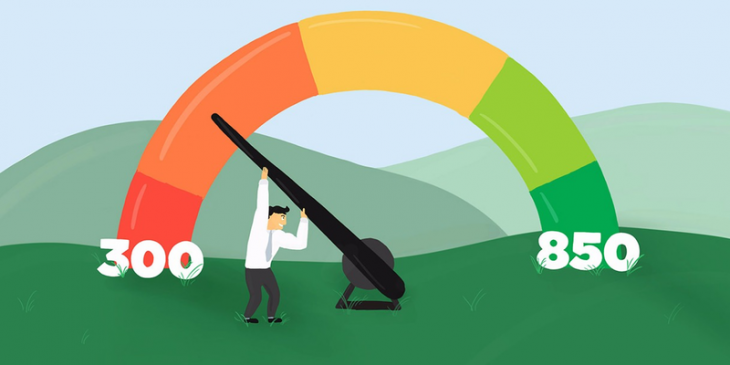
Your CIBIL score is a three-digit summary of your credit report, between 300 and 900. The higher it is, the more likely a lender believes you are to repay on time. There is no single official cut-off for “low”: each bank and NBFC sets its own policy. But the bands below reflect how lenders commonly read a score.
How lenders commonly read a CIBIL score
General guidance only. Bands are not set by any regulator; every lender applies its own policy and also looks at income, existing EMIs and recent payment history.
Two special cases are worth knowing. If you have never had a loan or credit card, CIBIL may show “NA” or “NH” (no history) instead of a score. That is not a low score, it is no score, and some lenders treat it more kindly than a poor one. And a score near a band edge, say 698 or 748, can cross over in a single month of good or bad behaviour.
Why your CIBIL score is low: the usual causes
Scores do not drop at random. Open your full report (you can get it free from each bureau once a year) and you will almost always find one or more of these.
Late or missed payments
The biggest single factor. Even one EMI or card payment 30+ days late shows up as “days past due” and stays visible for years, though its weight fades with time.
High credit card use
Using most of your card limit every month, even if you pay the minimum on time, signals stretch. Lenders like to see use well below the limit.
Settled or written-off accounts
“Settled” means the lender accepted less than you owed. It is one of the most damaging statuses on a report, and lenders read it as a loss they suffered.
Too many applications
Each loan or card application adds a hard enquiry. Several in a few weeks tell lenders you are searching hard for credit.
Many small app loans
A stack of short-term loan-app accounts, especially with rollovers or late payments, drags a score down quickly. See how multiple loans affect your score.
Errors in the report
A loan you closed still shown open, someone else’s account in your file, or a wrong overdue. These are fixable through a dispute.
Less obvious causes include being a guarantor or co-applicant on a loan that went bad, an old credit card you forgot had an annual fee that went unpaid, and a thin file with only one unsecured product.
The impact of a low CIBIL score
A low score does not ban you from credit. It changes the terms on which credit is offered, and that has a cost you can measure.
Fewer approvals
Many banks use an automated cut-off, often around 700 to 750, and reject below it without a human reading the file. Each rejection adds another enquiry.
Higher interest
Lenders price risk. A lower score usually means a higher rate, which compounds into a large difference over a multi-year loan.
Smaller amounts and shorter tenures
You may be offered less than you asked for, or a shorter tenure that pushes up the EMI.
No top-ups or balance transfers
The cheapest refinancing options, like moving a loan to a lower-rate lender, are generally offered only to borrowers with good scores.
Collateral or co-applicant requests
Lenders may ask for security, a guarantor or a co-applicant with a stronger profile.
Effects beyond loans
Some employers in financial services check credit reports during hiring, and landlords or postpaid providers occasionally do too.
What a low score can cost you, in rupees
Take an illustrative ₹3 lakh personal loan over 36 months. The only thing that changes below is the interest rate, which is what a weaker score most often changes.
Total interest on ₹3 lakh over 36 months, by interest rate
Illustrative. Reducing-balance EMIs: ₹10,108 at 13%, ₹10,846 at 18%, ₹11,770 at 24% and ₹12,735 at 30% a year. Fees not included. Rates shown are examples, not any lender’s pricing for a given score.
The same ₹3 lakh can cost about ₹95,000 more in interest when a weak score pushes the rate from 13% to 30%.
What a low score does not mean
- It is not a permanent label. Scores respond to the last 12 to 24 months of behaviour much more than to old history.
- It is not a blacklist. There is no “CIBIL defaulter list”; the bureau only reports data lenders send.
- It does not mean every lender will say no. Some lenders, Omozing among them, have a credit officer read the full report instead of rejecting on a number alone.
- It is not always your fault. Errors are common enough that every low-score borrower should check the report line by line before anything else.
How long does it take to recover?
There is no fixed timeline, and no one can honestly promise a specific score. What we see in general: correcting an error can show up after the bureau and lender complete the dispute process; clearing overdue amounts and bringing card use down usually reflects within a few monthly reporting cycles; and rebuilding after a settlement or write-off takes longer, often a year or more of clean payments.
The fastest wins are usually: dispute errors, pay off any overdue amount however small, bring credit card balances well below the limit, stop new applications for a few months, and put every EMI on auto-debit. Read whether a score can rise 50 points in three months for a realistic plan, or let our Credit Score Booster programme guide you through it.
If you need to borrow before your score recovers, read our hub on getting a personal loan with a CIBIL score from 600.
Low score? You still have options
Omozing considers salaried applicants with a credit score from 600 and a take-home salary of ₹40,000+ a month. A credit officer reads your full report, not just the number.
Frequently asked questions
What is considered a low CIBIL score?
There is no official cut-off, but most lenders treat scores below about 700 as low and below 650 as high risk. Scores of 750 and above usually get the best terms.
Is a CIBIL score below 700 bad?
It is below what many banks prefer, so approvals become harder and rates higher. It is not disqualifying everywhere: some NBFCs consider applicants from 600 if income and recent payments are steady.
Is 624 a bad CIBIL score?
A 624 score is in the low band. Most banks will decline, but some lenders that read the full report may still lend to a salaried applicant with stable income and no recent defaults.
What is the CIBIL score range?
CIBIL scores range from 300 to 900. If you have no credit history, the bureau may show NA or NH instead of a score.
What is the main reason for a low CIBIL score?
Late or missed payments are the most common cause, followed by high credit card use, settled or written-off accounts, many recent applications and reporting errors.
How long does a low CIBIL score take to improve?
It depends on the cause. Errors can be fixed through a dispute, overdues and card balances usually reflect within a few months, and recovery from a settlement or write-off typically takes a year or more of clean payments.
Omozing is the digital lending brand of Aparampaar Finance Private Limited, an RBI-registered non-deposit-taking NBFC. Eligibility and pricing depend on your full profile and are shown in the Key Fact Statement before you sign. See our regulatory disclosures and grievance redressal process.