
By the Omozing Credit Team, which includes IIT and IIM alumni · Updated October 2026 · 8-minute read
Seeing a low number when you expected a good one is stressful, especially when you need a loan. This guide is for that moment: what the number actually tells you, why it may have dropped, and a calm four-week plan. For the deeper reference on ranges and report terms, see all about the CIBIL score.
What your number is, and what it isn’t
It is
A three-digit estimate, from 300 to 900, of how likely you are to repay credit on time, based only on your credit report.
It isn’t
A measure of your income, your worth, or your character. It knows nothing about your savings, salary or job.
It isn’t a percentage
A 638 doesn’t mean “71%”. The scale starts at 300, and lenders read it in bands, not as a mark out of 900.
NH or -1 isn’t bad
It means there is no credit history, or not enough to score. It’s a blank page, not a black mark. See loans with no credit history.
Where your score sits
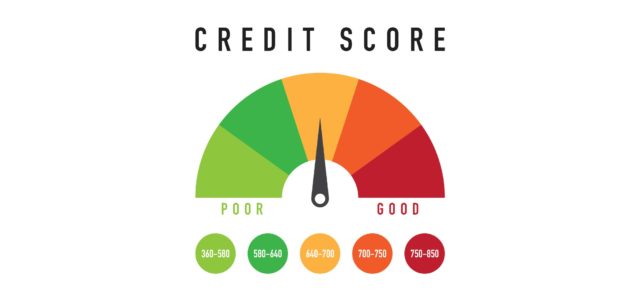
The 300–900 scale, read in bands
Positions are to scale. Band labels are a general guide; every lender sets its own cut-offs and reads the whole report. For a detailed band-by-band view of which lenders say yes, see what credit score you need for a personal loan.
Two examples readers ask about: a 580 sits just below the point where most unsecured lenders start, so a few months of clean history and lower card balances can make a real difference. A 638 is already above Omozing’s 600 starting point for salaried borrowers; the rest of your report will decide the outcome.
Why did my score drop? A quick triage
| What changed recently | Why it lowers the score | What to do |
|---|---|---|
| A card or EMI payment was late, even by days | Once reported as overdue, it is the strongest negative | Pay it now; set autopay for every due date |
| A big purchase on a credit card | Utilisation jumped | Pay it down before the statement date; it often recovers next cycle |
| You applied for several loans or cards | Each application adds a hard enquiry | Pause applications for a few months |
| You closed an old card | Lower total limit and shorter history | Keep remaining old cards open and lightly used |
| You settled a loan for less | “Settled” is read as a loss to the lender | Ask whether paying the balance can update it to closed |
| Nothing you can think of | An error, or a loan you don’t recognise | Check the report and dispute errors; report fraud at 1930 |
Most drops have one main cause. Find that line in your report before you try ten fixes at once.
A calm four-week reset
Week 1: Read, don’t react
Download your full report (one free full report per bureau each calendar year). Mark every late payment, open overdue account, recent enquiry and anything you don’t recognise.
Week 2: Stop the bleeding
Clear anything currently overdue. Turn on autopay for at least the minimum due on every card and every EMI. Don’t apply for new credit.
Week 3: Fix what is fixable fast
Raise disputes for errors with proof attached. Pay card balances down so each card is well below its limit, ideally under about 30%.
Week 4: Set the long game
Write down the date of your last late payment and plan for at least six clean months from there. Recheck your score after one or two reporting cycles, not every day.
For the realistic upside of this kind of plan, read can a CIBIL score improve by 50 points in 3 months? If you would rather have someone go through your report with you, our Credit Score Booster programme does exactly that, without promising a specific score.
What not to do when you feel stuck
- Don’t take a 7-day app loan to “build credit”. One missed repayment undoes months of progress.
- Don’t pay anyone who says they can delete accurate entries. They can’t.
- Don’t check your score through random apps that ask for contacts or gallery access.
- Don’t ignore recovery calls. Talk to the lender; a plan is better than silence.
- Don’t compare yourself with a friend’s score. Different histories, different numbers.
If you need a loan now
Omozing, a brand of RBI-registered NBFC Aparampaar Finance, lends to salaried people across India with a credit score from 600 and a take-home salary of ₹40,000 a month or more. A credit officer reads your whole report, so a single bad patch followed by clean repayments isn’t treated the same as a string of recent defaults. You can also apply with a co-applicant to strengthen the file. If several app loans are what pulled your score down, SmartSwitch can replace them with one EMI.
Score of 600 or more?
See how we assess salaried borrowers whose scores aren’t perfect.
Frequently asked questions
What does a CIBIL score of -1 mean?
It usually appears as NA or NH and means there is no credit history, or not enough to calculate a score. It is not a negative mark; it simply means lenders have little data about you.
Can I calculate my CIBIL score as a percentage?
Not meaningfully. The scale runs from 300 to 900, and lenders read it in bands. A 638 is a score in the lower-middle band, not 71%.
Is a 638 CIBIL score good enough for a loan?
Many banks prefer higher, but some NBFCs consider scores in the 600s. Omozing considers salaried applicants from 600 with a take-home salary of ₹40,000 or more, after reading the full report.
Can I get a loan with a 580 CIBIL score?
Unsecured personal loans are hard below 600. Secured options such as a gold loan or a loan against a fixed deposit, or applying with a strong co-applicant, are more realistic while you build the score up.
Why did my CIBIL score drop when I paid on time?
Common reasons are higher card usage, new hard enquiries from applications, closing an old card, or an error in the report. Check the report to see which one applies.
How often does the CIBIL score update?
It changes when lenders report new information, which most do monthly. Improvements usually show after one or two reporting cycles, not overnight.
Omozing is the digital lending brand of Aparampaar Finance Private Limited, an RBI-registered non-deposit-taking NBFC. Loans are subject to credit assessment. See our regulatory disclosures and grievance redressal process.