
By the Omozing Credit Team · Updated October 2026 · 8-minute read
This guide is for the last stretch: you are somewhere between 650 and 749 and want to reach 750. If you are starting lower, begin with 9 ways to improve your CIBIL score fast or the 30–60 day plan.
Why 750 is the number everyone aims for
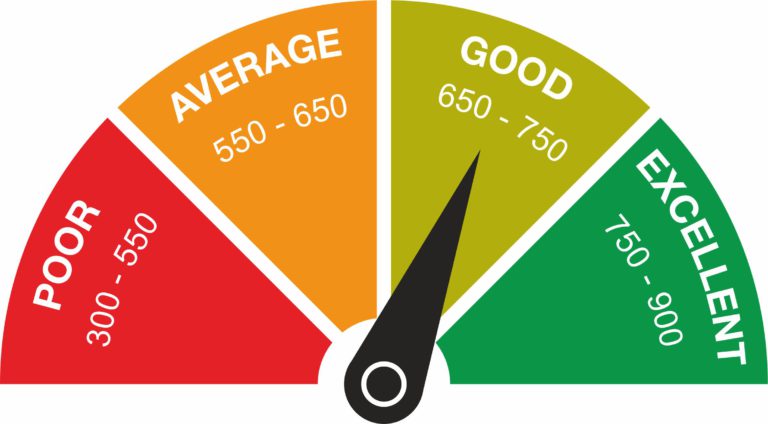
Credit scores in India run from 300 to 900. There is no law that makes 750 special, but many banks use something close to it as the line above which they offer their best rates, highest limits and fastest decisions. Below it you can still borrow; above it, you start choosing lenders instead of them choosing you.
750 is a common benchmark, not a universal rule. Every lender sets its own policy.
What a 750+ profile looks like
| Factor | Typical profile around 680–720 | Typical profile at 750+ |
|---|---|---|
| Late payments | One or two 30-day delays in the last year | None in the last 12–24 months |
| Card utilisation | 40–80% of limits used most months | Under about 30%, often far lower |
| Recent enquiries | Several applications in the last six months | Few, spaced out |
| Credit mix | Only cards, or only small app loans | A card plus an instalment loan, repaid well |
| Age of accounts | Mostly new accounts | At least one account several years old, still open |
| Negative remarks | A settled account or an open overdue | None, or old and fully resolved |
Compare your report column by column. The rows where you sit on the left are your to-do list. To understand why each row matters, see how the CIBIL score is calculated.
The five levers that close the gap
Clear every overdue amount
An open overdue, however small, caps your score. Pay it, get confirmation, and check the next report shows it as current or closed.
Pay balances down before the statement date
Lenders usually report the balance on your statement. Paying most of it a few days earlier lowers the utilisation that gets reported, even if you always pay in full.
Make every payment on time, automatically
At 700+, a single new late payment is the biggest setback you can have. Autopay at least the minimum due on every card and EMI.
Stop applying for a while
Each hard enquiry is small, but a cluster of them reads as credit hunger. Let six months pass without new applications if you can.
Keep old accounts and add mix carefully
Don’t close your oldest card. If your file is only cards, a modest instalment loan you genuinely need, repaid on time, adds healthy mix. Don’t borrow just for the score.
Also check your report for errors: a closed loan still showing open or a wrong overdue can be what keeps you at 720. Our CIBIL dispute resolution page explains how to fix it.
What the climb can look like
An illustrative path from 690 to 750
Illustrative only, not a prediction or a real customer. It assumes a starting score of 690, no new late payments, card use brought under 30% early on and no new applications. Real movement depends on your full history, and no one can promise a particular score by a particular date.
Notice the shape. The first few months move faster because fixing errors and card balances shows up within a reporting cycle or two. After that, progress comes from time: each clean month makes old blemishes count for a little less. If you want a realistic short-term target, read can a CIBIL score improve by 50 points in 3 months?
Mistakes that keep people stuck at 720–740
Closing a paid-off card
Feels tidy, but it can shorten your history and push utilisation up on the remaining cards.
Rate-shopping on many sites
“Check your offer” forms sometimes trigger hard enquiries. Read the fine print before you submit.
Small app loans for convenience
Several tiny loans and enquiries can drag a good score down. See how multiple loans affect your score.
Co-signing casually
A loan you guarantee or co-borrow appears on your report too, and their late payment becomes yours.
Do you need 750 to borrow?
No. 750 gets you the best bank terms, but you don’t have to wait for it if you need a loan now. Omozing, a brand of RBI-registered NBFC Aparampaar Finance, lends to salaried people with a score from 600 and a take-home salary of ₹40,000 a month or more, up to ₹25 lakh, with rates starting from 11% a year. A credit officer reads your full report, and every on-time EMI on that loan also counts toward the history that gets you to 750. If you want structured help with the climb, our Credit Score Booster reviews your report with you, without promising a specific score.
Not at 750 yet? You may not need to be
See how we assess salaried borrowers with scores from 600, and check if you qualify.
Frequently asked questions
How do I get a 750 credit score?
Keep every payment on time, use well under 30% of your card limits, avoid clusters of new applications, keep old accounts open and fix any errors in your report. Most profiles that reach 750 have at least a year of clean history behind them.
How long does it take to go from 700 to 750?
It depends on what is holding you back. If it is high card usage or an error, a few months may be enough. If it is a recent late payment, expect to need many months of clean history.
Is 738 a good credit score?
Yes, it is a good score and most lenders will consider you. Reaching 750 or more may help you get the best rates from banks.
Can I improve a 750 credit score further?
Yes. The same habits keep pushing it up: on-time payments, low utilisation and few applications. Above 750, though, the practical benefit of each extra point is usually small.
Does a credit score of 762 qualify for a personal loan?
A 762 is a strong score. Approval still depends on your income, existing EMIs and the lender’s policy, but you should have a wide choice of lenders.
Can a paid service get me to 750 quickly?
No one can remove accurate negative entries or guarantee a score. A good repair service helps you read your report, dispute genuine errors and plan your repayments; the time it takes still depends on your history.
Omozing is the digital lending brand of Aparampaar Finance Private Limited, an RBI-registered non-deposit-taking NBFC. Loans are subject to credit assessment. See our regulatory disclosures and grievance redressal process.