
By the Omozing Credit Team, which includes IIT and IIM alumni · Updated October 2026 · 10-minute read
How to use this checklist
This is a diagnosis guide, not a general explainer. If you want to understand what a low score means for borrowing, start with our guide to what a low CIBIL score means. If you want the positive side, read what creates a good CIBIL score. Here, we go cause by cause, with what to look for on your report and what to do about it.
Download your full CIBIL report (one free full report per bureau each calendar year).
Look at every account’s status and its monthly DPD grid.
Go through the 11 causes below and mark which apply.
Errors and utilisation first, then repayment habits.
You will need the report itself, not just the number. Our page on checking your credit score for free shows how to get it.
The 11 causes, one by one
Late or missed EMIs and card payments
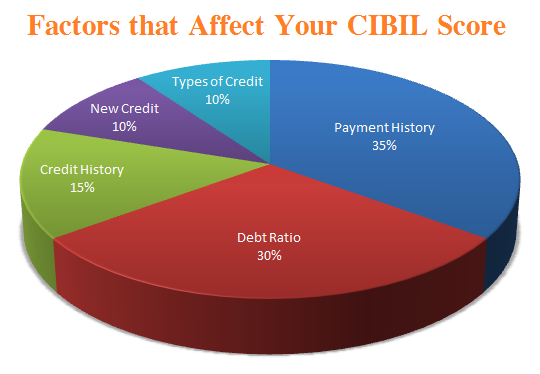
Look for: numbers like 30, 60, 90 or more in the days-past-due (DPD) grid, instead of 000 or STD. Why it hurts: payment history is the biggest single input to the score, and recent delays weigh most. Fix: clear any current overdue, then set auto-debits a few days after salary credit so it never happens again.
A “settled” account
Look for: the word Settled in the account status. Why it hurts: it tells future lenders a past lender accepted less than it was owed. Fix: ask that lender how much is needed to close the account as fully paid, pay it, and ask them to update the status.
A “written off” account
Look for: Written off, or a written-off amount. Why it hurts: it is one of the most serious remarks on an unsecured loan. Fix: see what to do about a CIBIL write-off.
Credit cards near their limit
Look for: the current balance against the credit limit on each card. Add them up. Why it hurts: high utilisation suggests you depend on credit. A common rule of thumb is to stay under about 30% of your total limit. Fix: pay down before the statement date; this is often the fastest visible improvement.
Paying only the minimum due
Look for: card balances that stay high or grow month after month. Why it hurts: you are not late, but a revolving balance keeps utilisation high and costs heavy interest. Fix: move the balance to a cheaper, fixed-EMI loan and stop using the card until it is cleared.
Too many loan or card applications
Look for: the enquiries section. Several enquiries from different lenders within a few weeks is a red flag. Why it hurts: it signals urgent credit hunting. Fix: stop applying for a few months; the effect fades. Apply only where you clearly qualify.
Many small loan-app loans
Look for: a stack of short-tenure personal loans of ₹5,000 to ₹50,000 from NBFCs you know only as app names. Why it hurts: lenders read this pattern as cash-flow stress, and each one is a chance to be late. Fix: consolidate them into one EMI before a delay happens. That is what SmartSwitch is for.
Only unsecured credit
Look for: a report with nothing but personal loans and cards. Why it hurts: a narrow mix of unsecured debt is read as higher risk. Fix: no need to borrow for the sake of it, but if you need credit, a secured product such as a gold loan or a card against a fixed deposit adds balance.
A short or freshly reset history
Look for: your oldest open account. If you closed your oldest cards, your visible history may be short. Why it hurts: less history means less evidence. Fix: keep old cards open and use them lightly; time does the rest.
A loan you guaranteed, or a joint loan, that went bad
Look for: accounts where your ownership is shown as Guarantor or Joint. Why it hurts: if the main borrower misses payments, it shows on your report too. Fix: talk to the borrower and lender; you may need to clear the dues yourself to protect your record.
Errors or fraud on your report
Look for: loans you never took, closed loans still marked open, wrong amounts, or a wrong date of birth or PAN. Why it hurts: the bureau scores what is reported, right or wrong. Fix: raise a free dispute. Our CIBIL dispute guide has templates.
Which causes to tackle first
Impact versus time to fix (qualitative)
A qualitative guide based on how lenders commonly read these entries, not a measured scoring model. Your own mix of causes, and how recent they are, determines the real effect.
The pattern is simple. Errors and card balances are the only causes you can change within one or two reporting cycles. Repayment problems take longer because the score needs a run of clean months to outweigh them, which is exactly why you should start now. For realistic timelines, read can a CIBIL score improve by 50 points in 3 months?
Worked example: diagnosing a 640
An illustrative profile, not a real customer: Rahul, 31, salaried in Pune, take-home ₹62,000, score 640. Going through his report with the checklist:
| Cause | Found on Rahul’s report | Action |
|---|---|---|
| 4. Utilisation | ₹68,000 used on an ₹80,000 limit (85%) | Pay down to under ₹24,000 |
| 6. Enquiries | 5 enquiries in 6 weeks | Stop applying for 3–6 months |
| 7. App loans | 4 short-term app loans, ₹15,000–₹25,000 each | Consolidate into one EMI |
| 1. Late payment | One 30-day delay, 8 months ago | Keep every payment on time from here |
| 11. Errors | A closed loan still showing ₹4,200 due | Dispute with the NOC |
None of Rahul’s causes is catastrophic. His biggest risk is the stack of app loans turning one tight month into several missed payments. Fixing the error, cutting utilisation and consolidating the app loans would address four of his five causes within a few months.
What about a “0” or “NH” score?
If your report shows NA or NH, or an app shows your score as 0 or -1, it usually means there is not enough credit history to calculate a score. That is not one of the 11 causes; it is a different situation. See our guide to a personal loan without a CIBIL history.
What does not cause a low score
- Checking your own score, however often.
- A low salary, or a change of job (lenders check these separately).
- Having no savings or a low bank balance.
- Using a debit card or UPI heavily.
- Paying rent or utility bills late (generally not reported to bureaus, though it is still worth paying on time).
Can you borrow while you fix it?
Often, yes. Omozing considers salaried applicants with a score from 600 and a take-home salary of ₹40,000 or more, and a credit officer reads the whole report. A cause you have already fixed, such as an old delay followed by months of clean payments, is read very differently from an active overdue. Adding a co-applicant with a cleaner record can also help; see how co-applicants strengthen an application.
Score between 600 and 700?
See how we assess salaried borrowers who are working on their score, or get structured help fixing the causes first.
Frequently asked questions
What is the most common reason for a low CIBIL score?
Late or missed payments on loans and credit cards. Payment history carries the most weight, so even one recent 30-day delay can pull a score down noticeably.
Can my CIBIL score be low for no reason?
There is always a reason in the report, but it may not be yours. Errors, a loan taken fraudulently in your name, or a loan you guaranteed for someone else can all lower your score. Check every account and dispute anything wrong.
Does a 0 CIBIL score mean I am a defaulter?
No. A score shown as 0, -1, NA or NH usually means there is not enough credit history to calculate a score. It is not a negative mark.
Which cause can I fix the fastest?
Reporting errors and high credit card utilisation. A successful dispute or a paid-down card balance can show within one or two monthly reporting cycles.
Do many small loan-app loans really lower my score?
They can. Many short-term loans signal cash-flow stress and add more chances of a late payment. Consolidating them into a single EMI reduces that risk.
Will closing my credit card improve my score?
Usually not. Closing a card reduces your total limit, which can push utilisation up, and closing an old card can shorten your credit history.
Omozing is the digital lending brand of Aparampaar Finance Private Limited, an RBI-registered non-deposit-taking NBFC. Loans are subject to credit assessment. See our regulatory disclosures and grievance redressal process.