
By the Omozing Credit Team, which includes IIT and IIM alumni · Updated October 2026 · 9-minute read
What counts as a low or bad CIBIL score?
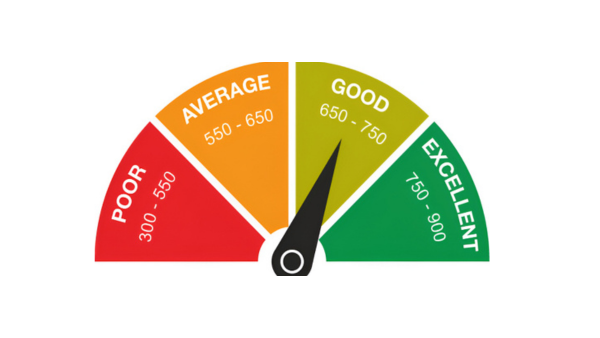
Credit scores from all four bureaus in India (TransUnion CIBIL, Experian, Equifax and CRIF High Mark) run from 300 to 900. There is no official “bad” line, but lenders tend to read scores in bands like these:
| Score band | How most lenders read it | What it usually means for a personal loan |
|---|---|---|
| 750 and above | Strong | Wide choice of lenders and the best rates |
| 700–749 | Good | Most banks and NBFCs will consider you |
| 650–699 | Fair / “low” | Banks get selective; many NBFCs still lend if income is steady |
| 600–649 | Weak / “bad” | Fewer lenders; a credit officer’s judgement matters a lot |
| Below 600 | High risk | Unsecured loans are hard; secured options or repair come first |
General market pattern, not a rule. Every lender sets its own policy.
The number alone rarely tells the full story. A 640 caused by one card that went 60 days late two years ago, followed by 20 months of clean payments, is a very different risk from a 640 caused by three missed EMIs last quarter. Good lenders look at why the score is low and which direction it is moving.
What each type of lender does with a low score
This is the part most borrowers get wrong. They apply everywhere, collect rejections, and every rejection adds another hard enquiry that drags the score lower. Instead, match your profile to the lender type that is built for it.
| Lender type | Typical stance on scores below 700 | Speed | Cost | Watch out for |
|---|---|---|---|---|
| Large private and public banks | Usually decline; may consider existing salary-account customers | Days to weeks | Lowest | Automated score cut-offs; a rejection still leaves an enquiry |
| NBFCs focused on salaried borrowers | Many consider 600–700 if income, employer and recent repayments are steady | 1–3 days | Moderate; higher than banks | Processing fees; compare the APR in the KFS, not just the rate |
| Fintech platforms partnered with NBFCs | Varies widely by the lending partner behind the app | Hours to days | Moderate to high | Check which RBI-registered lender actually gives the loan |
| Short-term loan apps | Approve low scores for small, short loans | Minutes | Very high (fees plus daily interest) | Rollovers, debt traps, illegal apps |
| Secured lenders (gold, FD, property) | Score matters less because the asset backs the loan | Same day to weeks | Low to moderate | You can lose the asset if you default |
A general comparison of lender categories in India. Individual lenders differ; always read the Key Fact Statement.
For most salaried people with a score between 600 and 700, the sweet spot is an NBFC that lends specifically to salaried borrowers and has a human credit officer review the file. That is the gap Omozing was built for: personal loans for salaried people with a credit score from 600, where a credit officer reads your full report instead of relying only on an automated cut-off.
Why the right lender saves you real money
A low score usually means a higher rate. But the gap between a well-priced lender and an expensive one is large enough to be worth an afternoon of comparison.
Total interest on a ₹2 lakh loan over 24 months, at different annual rates
Illustrative reducing-balance EMI maths, excluding processing fees and GST. These are example rates to show the effect of pricing, not a quote from Omozing or any lender. Your Key Fact Statement shows your exact rate, fees and APR.
The difference between the cheapest and costliest bar is more than ₹42,000 on the same ₹2 lakh. And a short-term loan app, which charges a fee plus daily interest, would cost far more than any bar on this chart if you roll it over. If you are already juggling app loans, read what makes payday loans so expensive before borrowing again.
How to choose a lender when your score is low
- Confirm it is regulated. The loan must come from an RBI-registered bank or NBFC. The app or website should name the lender clearly.
- Check the eligibility fit first. Minimum score, minimum take-home salary, employment type, city. Applying where you clearly don’t fit only adds an enquiry.
- Compare the APR, not the headline rate. Under RBI’s digital lending rules you must get a Key Fact Statement with the annual percentage rate and every fee before you sign.
- Ask whether a person reviews the file. With a borderline score, a credit officer who reads the reasons behind it can approve what an algorithm would reject.
- Never pay anything upfront. A genuine lender deducts fees from the disbursal; it does not ask for a “file charge” or “insurance” payment before approval. Omozing never asks for upfront fees.
- Check privacy and recovery. Regulated apps may not access your contacts, call logs or photos, and must follow fair recovery practices.
How to apply smartly: a 6-step plan
Pull your own report from all four bureaus
You are entitled to one free full credit report per bureau per calendar year. Checking your own report is a soft enquiry and does not lower your score.
Fix errors before you apply
A closed loan still showing as open, a settled account marked “written off”, or a loan that isn’t yours can cost you 50 points or more. Raise a dispute with the bureau; our CIBIL dispute guide shows how.
Clear or reduce small overdues
A ₹3,000 credit card overdue can block a ₹3 lakh loan. Paying off small dues and bringing card usage below about 30% of the limit helps quickly.
Borrow what your salary can carry
Lenders check how much of your take-home already goes into EMIs. Asking for a smaller amount, or a longer tenure, often turns a “no” into a “yes”.
Add a co-applicant if you can
A spouse, parent or sibling with a steady income and a good score can strengthen the file. See how a co-applicant helps.
Apply to one or two well-matched lenders, not ten
Space applications out. Several hard enquiries in a few weeks signal credit hunger and can push your score down further.
What lenders look at besides the score
Works in your favour
- Salary credited to the same bank account every month
- 12+ months with your current employer
- No missed EMIs in the last 6–12 months
- Few recent loan enquiries
- Total EMIs well below half your take-home
Raises red flags
- Recent defaults, settlements or write-offs
- Several small app loans open at once
- Bounced EMIs or cheques in your bank statement
- Many applications in the last 30 days
- Cash salary with no bank trail
At Omozing, a salaried applicant needs a credit score from 600, a take-home of ₹40,000 a month or more, and two documents: a 6-month salary-account bank statement and the latest salary slip. Loans go up to ₹25 lakh for 3–36 months, with rates starting from 11% a year and a processing fee of 3%–7% plus GST. Your exact rate, fees and APR are in the Key Fact Statement before you sign.
An illustrative example
Ravi (an illustrative profile, not a real customer) earns ₹52,000 a month in Pune and has a CIBIL score of 648, mainly because of a credit card that went 90 days overdue two years ago. He has paid everything on time for the last 18 months.
A large bank’s automated check declines him on the score. A short-term app offers ₹20,000 for 30 days, which would not cover his ₹1.5 lakh need and would cost heavily if he rolled it over. An NBFC that reviews files manually sees the old problem, the clean recent record and the steady salary, and considers a ₹1.5 lakh loan over 24 months. The point is not that every such file is approved; it is that matching the lender to the profile gives Ravi a real chance without wrecking his score with rejections.
If you’re declined: better next steps
- Ask why. Lenders can tell you the main reason. Fix that one thing before reapplying.
- Wait 2–3 months while you repair. On-time payments and lower card usage show up quickly. Our Credit Score Booster programme helps you work on it step by step; nobody can honestly promise a specific score.
- Consider a secured loan against gold or a fixed deposit for urgent needs. See every type of loan you can still get with a low score.
- Avoid stacking app loans. If you already have several, SmartSwitch can replace them with one EMI.
Salaried, with a CIBIL score from 600?
Omozing’s credit officers read your full report, not just the number. Two documents, loans up to ₹25 lakh, rates from 11% a year, and no upfront fees.
For a full guide, see Personal loan for a 600–700 CIBIL score: what lenders actually check.
Frequently asked questions
Can I get a personal loan with a CIBIL score of 600?
It is possible, mostly from NBFCs that lend to salaried borrowers and review files manually. Omozing considers salaried applicants with a score from 600 and take-home pay of ₹40,000 a month or more, subject to a full credit assessment.
Which lender gives personal loans for a bad CIBIL score?
Banks rarely do. NBFCs focused on salaried customers, fintech platforms backed by RBI-registered NBFCs, and secured lenders are the realistic options. Always check that the actual lender is RBI-registered and read its Key Fact Statement.
Does applying to many lenders lower my score?
Yes. Each loan application usually triggers a hard enquiry, and several in a short period can lower your score and make lenders cautious. Check your own report first and apply to one or two lenders that fit your profile.
Will I pay a higher interest rate with a low score?
Usually yes, because the lender prices in more risk. Compare the annual percentage rate (APR) shown in each Key Fact Statement, which includes fees, rather than the headline rate alone.
Is guaranteed approval for a bad CIBIL score real?
No. A regulated lender has to assess every application. Offers of guaranteed approval, especially those asking for an upfront fee, are a common sign of a scam.
How quickly can I improve a low CIBIL score?
Fixing report errors can help within a month or two once the bureau updates. Building a clean record of on-time payments and lower card usage usually shows meaningful progress over 3 to 6 months.
Omozing is the digital lending brand of Aparampaar Finance Private Limited, an RBI-registered non-deposit-taking NBFC. All loans are subject to credit assessment. See our regulatory disclosures and grievance redressal process.