
By the Omozing Credit Team, which includes IIT and IIM alumni · Updated October 2026 · 9-minute read
What the CIBIL score actually is
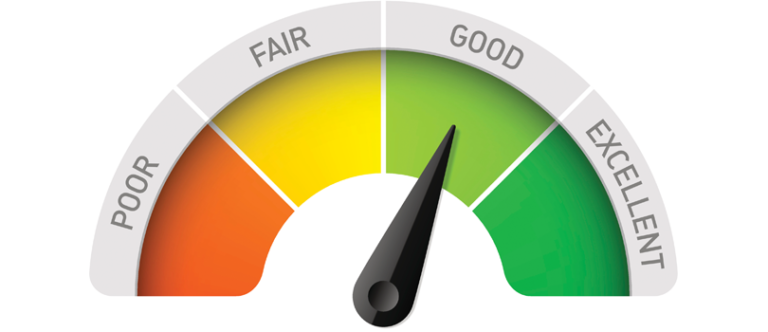
The CIBIL score is a three-digit number between 300 and 900 that TransUnion CIBIL produces from your credit report. It is a summary of one question: based on how this person has handled credit so far, how likely are they to repay the next loan on time? The closer to 900, the lower the predicted risk.
India has four credit bureaus, TransUnion CIBIL, Experian, Equifax and CRIF High Mark, and each builds its own score from the data lenders send it. Because each bureau uses its own model, and lenders do not always report to all four on the same day, your scores can differ by a few points, or sometimes more, from bureau to bureau. That is normal.
The score is not a judgment, and the bureau does not approve or reject loans. It only records and summarises. The lender decides. (If you want to know what a weak number means for borrowing, our guide to what a low CIBIL score means covers that.)
The inputs that go into the calculation
CIBIL publishes the broad factors it looks at, but not the precise weights or formula. Here is what feeds the score, roughly in order of how much it usually matters:
From your credit report to your score
The order reflects the factors CIBIL and lenders commonly describe as most to least influential. CIBIL does not publish exact percentages, so treat any website that quotes precise weights for CIBIL with caution.
1. Payment history
Every month, each lender reports whether your EMI or card bill was paid on time, and if not, how many days past due (DPD) it was. Your report shows this month by month as a grid of DPD entries. A run of “000” or “STD” (standard) is what you want. Entries like 30, 60 or 90+ days past due pull the score down, and the later and more recent the delay, the bigger the damage. Remarks such as settled or written off are among the most harmful entries of all.
2. Credit utilisation
This is the share of your credit card limits you are using. It is calculated on the balance reported on your statement date, not on whether you later pay in full. Many lenders and bureaus suggest keeping it under about 30% of your total limit.
3. Length of credit history
How long you have had credit, and how old your oldest active account is. A five-year-old card that has always been paid on time is valuable evidence. Closing it can shorten your visible history and raise your utilisation at the same time.
4. Credit mix
A healthy mix of secured credit (home, car, gold loans) and unsecured credit (personal loans, credit cards) shows you can handle different kinds of borrowing. A report made up only of unsecured loans, especially many small ones, is read as higher risk.
5. Recent enquiries and new accounts
Every time you apply for a loan or card, the lender makes a “hard” enquiry, which is recorded. Several in a short span signal that you are hunting for credit. Checking your own score is a “soft” enquiry and does not count against you.
Worked example: how utilisation is calculated
Take an illustrative borrower, Priya (an illustrative profile, not a real customer), with two credit cards: one with a ₹1,00,000 limit and one with a ₹50,000 limit. Her total limit is ₹1,50,000.
Same cards, three different utilisation levels
Illustrative. Utilisation = total statement balances ÷ total card limits. Bars are drawn to scale (100% = 480px). The 30% guide is a common rule of thumb, not an official CIBIL threshold.
If Priya pays ₹1,27,500 in full every month, she never pays interest, yet her report shows 85% utilisation each month. The fix is simple: pay part of the bill before the statement date, spread spends across cards, or ask for a higher limit and keep spending the same.
What is not counted
A lot of people are surprised by this list. None of the following go into your CIBIL score:
| Not in the score | Why it surprises people |
|---|---|
| Your salary or income | A ₹2 lakh salary does not raise your score. Lenders check income separately, from payslips and bank statements. |
| Savings, FDs, mutual funds, bank balance | Assets are not credit, so the bureau does not see them. |
| Debit card use | A debit card spends your own money. Only credit products are reported. |
| Checking your own score | A soft enquiry. Check as often as you like. |
| Age, gender, religion, marital status, city | Personal details appear on the report for identification, not as scoring factors. |
| Rent, phone and electricity bills | Generally not reported to bureaus in India, so paying them on time does not build a score. |
| Loans from friends or family | Informal, so unreported (and missing a payment to them will not show either). |
There is one indirect exception. A cheque or auto-debit that bounces on an EMI is a missed loan payment, and that does show. See how a cheque bounce affects your CIBIL.
Why “CIBIL calculators” can only estimate
Search for “CIBIL calculator” and you will find tools that ask a few questions and return a number. They can be useful as a rough guide to what matters, but they cannot calculate your real score, because:
- The CIBIL model and its weights are not public.
- The model uses your full account-level history, not five answers in a form.
- Your score depends on what lenders have actually reported, which may differ from what you remember (including errors).
The only way to know your score is to pull your report. You are entitled to one free full credit report from each bureau every calendar year, and many platforms show your score free at other times. Our page on checking your credit score for free walks through the options.
Thin files: when there is no score yet
If you have never had a loan or credit card, or your history is very short, CIBIL may show “NA” or “NH” instead of a number. That means “not enough history to score”, not “bad”. Some lenders will not lend without a score; others look at income and banking instead. Our guide to a personal loan without a CIBIL history covers how to start.
How to move each input in your favour
Automate every EMI and card payment
Set auto-debits for at least the minimum due, a few days after salary credit. Payment history is the input that matters most.
Bring utilisation under about 30%
Pay down before the statement date, or ask for a limit increase without increasing spend.
Keep your oldest card open
Use it for a small recurring bill and pay it in full.
Space out applications
Apply only where you are likely to qualify, and avoid several applications in the same month.
Fix errors fast
A loan you closed still showing as open, or an account that is not yours, can be corrected free through the CIBIL dispute process.
For the factors in more depth, read what creates a good CIBIL score. If you want help prioritising, our Credit Score Booster team reviews your full report.
How lenders use the number
The score is usually the first filter, not the whole decision. Lenders also look at the detail behind it: recent delays, open loans, existing EMIs against your salary, and how stable your job is. At Omozing, a credit officer reads the full report for salaried applicants with a score from 600 and a take-home salary of ₹40,000 or more, so a single old blemish does not automatically mean a no.
Know your score? See what you qualify for
Omozing considers salaried borrowers with a CIBIL score from 600, with rates starting from 11% a year and the full cost shown in a Key Fact Statement before you sign.
Frequently asked questions
Can I calculate my CIBIL score myself?
Not exactly. The formula is proprietary to TransUnion CIBIL. You can estimate the direction your score will move by looking at your payment history, utilisation and enquiries, but the only way to know the number is to check your credit report.
What has the biggest effect on a CIBIL score?
Payment history. Paying every EMI and card bill on time, every month, matters more than anything else. Credit utilisation is usually the next most important factor.
Does my salary affect my CIBIL score?
No. Income is not reported to credit bureaus. Lenders check your salary separately when you apply, from your payslip and bank statement.
Does checking my own CIBIL score reduce it?
No. Checking your own score is a soft enquiry and has no effect. Only hard enquiries, made when a lender assesses an application, are counted.
How often is the CIBIL score updated?
Lenders usually report to the bureaus once a month, so your score can change as each lender’s update arrives. A payment you make today may take a reporting cycle or two to show.
Why is my CIBIL score different from my Experian or CRIF score?
Each bureau uses its own model, and lenders may report to them at different times. Small differences are normal. Large differences can point to a reporting error worth checking.
What does NA or NH mean on a CIBIL report?
It means there is not enough credit history to generate a score, usually because you are new to credit. It is not a negative mark.
Omozing is the digital lending brand of Aparampaar Finance Private Limited, an RBI-registered non-deposit-taking NBFC. Loans are subject to credit assessment. See our regulatory disclosures and grievance redressal process.