
By the Omozing Credit Team, which includes IIT and IIM alumni · Updated October 2026 · 9-minute read
This is our plain-English reference to CIBIL itself: the company, the score and the report. If you want to know what drives the score up or down, see what creates a good CIBIL score. If your score is low and you want to know why, read what a low CIBIL score means.
What CIBIL is, and what it isn’t
TransUnion CIBIL is one of four credit information companies licensed in India; the others are Experian, Equifax and CRIF High Mark. Banks and NBFCs report how every borrower repays, and each bureau turns that data into a credit report and a score. CIBIL is the oldest, so people say “CIBIL score” the way they say “Xerox” for a photocopy.
CIBIL does
- Collect repayment data from lenders.
- Produce your credit report and score.
- Process disputes when you report an error.
CIBIL does not
- Approve or reject loans. Lenders decide.
- Keep a “defaulters’ blacklist”.
- Change data itself without the lender confirming it.
How your score is created
Because lenders report in cycles, a payment you make today may take a few weeks to show up on your report.
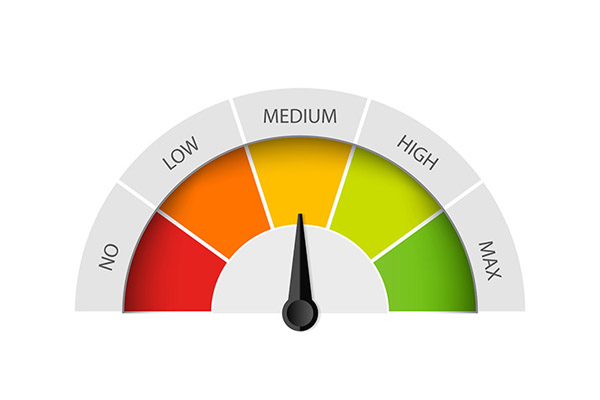
CIBIL score ranges: what the numbers mean
The 300–900 scale and how lenders commonly read it
Band labels are a common way to read the scale, not official CIBIL categories. Each lender sets its own cut-offs and also looks at your full report and income.
A score of 809 sits comfortably in the top band. At that level, extra points rarely change a decision; your income and existing EMIs matter more. Lower down, every band matters: our guide to what score you need for a personal loan shows how different lenders treat each range.
How to read your CIBIL report, section by section
The score is the headline. The report is the story, and it is what a careful credit officer reads.
| Section | What it shows | What to check |
|---|---|---|
| Personal information | Name, date of birth, gender, PAN and other IDs | Spelling and date of birth match your PAN |
| Contact information | Addresses, phone numbers and email reported by lenders | No addresses or numbers you don’t recognise |
| Employment information | Occupation and income, if reported | Usually sparse; not a concern if blank |
| Account information | Every loan and card: lender, type, dates, balance, overdue amount and a month-by-month payment history | Accounts you don’t own; closed loans still shown open; “settled” or “written-off” status; late-payment marks |
| Enquiry information | Each time a lender pulled your report for an application | Enquiries you didn’t authorise; many in a short span |
In the payment history, each month shows the number of days past due (DPD). “000” or “STD” means paid on time. Numbers like 030 or 090 mean the payment was that many days late. A string of zeros is what every lender wants to see.
Common CIBIL terms decoded
Closed
The loan was repaid in full. This is the status you want for every finished loan.
Settled
You paid less than the full amount by agreement. It stops collections but tells future lenders the loan wasn’t fully repaid.
Written off
The lender has given up expecting full repayment. One of the most serious marks on a report.
Hard enquiry
A lender checked your report for a loan application. One enquiry has a small effect; many in a few weeks add up.
Soft enquiry
You checked your own score, or a lender checked for a pre-approved offer. It doesn’t lower your score.
NA / NH
Not enough history to calculate a score. It means “unknown”, not “bad”.
Questions people ask about CIBIL
| Question | Short answer |
|---|---|
| Does one hard enquiry hurt my score? | Slightly and temporarily. Several applications in a short time hurt more. |
| Does my father’s or spouse’s CIBIL score affect me? | No. Scores are individual. It matters only if you borrow together as co-applicants or guarantors. |
| Is there a “CIBIL clearance certificate”? | No such certificate exists. Repay or close the loan, get a no-dues letter or NOC from the lender, and check that your report shows the account as closed. |
| Does checking my own score lower it? | No. Your own checks are soft enquiries. |
| Is my CIBIL score the same as my Experian score? | No. Each bureau has its own model and data, so scores differ slightly. |
| Is 720 a good score? | Yes, most lenders will consider it. Your income, EMIs and report details then decide the rate and amount. |
How to check your CIBIL score and report
Get your free annual report
You are entitled to one free full credit report per bureau every calendar year. Start with CIBIL’s own website, then repeat with the other three bureaus. Our free credit score guide walks you through it.
Read every account
Use the section table above. Note anything wrong or unfamiliar.
Dispute errors
Raise a dispute with the bureau online; it verifies with the lender. Our dispute how-to has templates, and Omozing’s dispute support can help if you’re stuck.
Protect your identity
An unknown account can mean fraud. Report it to the lender and bureau, and to the cybercrime helpline 1930 or cybercrime.gov.in if your identity was misused.
Lenders read your report, not just your score. Make sure the story it tells is accurate.
Where Omozing fits
Many lenders use the score as a hard cut-off. At Omozing, a credit officer reads your full report, so one old late payment or a thin file doesn’t automatically decide the outcome. We lend to salaried people with a credit score from 600 and a take-home of ₹40,000 or more a month, up to ₹25 lakh over 3 to 36 months, with rates starting from 11% a year. Approval isn’t guaranteed, and your exact rate, fees and APR are in the Key Fact Statement before you sign. If you want to work on your score first, our Credit Score Booster programme can guide you; no one can honestly promise a specific score.
Score between 600 and 750?
See how Omozing assesses salaried applicants by reading the whole report, not just the number.
Frequently asked questions
What is a CIBIL score?
A three-digit number from 300 to 900 calculated by TransUnion CIBIL from your credit history. It estimates how likely you are to repay on time; higher is better.
What is the best CIBIL score range?
Most lenders treat 750 to 900 as excellent. Above about 750, your income, existing EMIs and the details in your report usually matter more than extra points.
What are the main sections of a CIBIL report?
Personal information, contact information, employment information, account information with month-by-month payment history, and enquiry information showing which lenders have checked your report.
Does a single hard enquiry affect my credit score?
A single enquiry has a small, temporary effect. Several loan or card applications in a short period have a bigger impact and can make lenders cautious.
Does my parent’s CIBIL score affect my loan application?
No. Credit scores are individual. A family member’s score matters only if they join your loan as a co-applicant or guarantor.
How do I get a CIBIL clearance?
There is no official CIBIL clearance certificate. Repay or close the loan, collect a no-dues letter or NOC from the lender, and check your report shows the account as closed. If it doesn’t, raise a dispute.
How often is my CIBIL score updated?
Lenders report data to the bureaus regularly, usually monthly, so changes typically appear within a few weeks of a payment or closure.
Omozing is the digital lending brand of Aparampaar Finance Private Limited, an RBI-registered non-deposit-taking NBFC. See our regulatory disclosures and grievance redressal process.