
By the Omozing Credit Team, which includes IIT and IIM alumni · Updated October 2026 · 7-minute read
What the score tells a lender
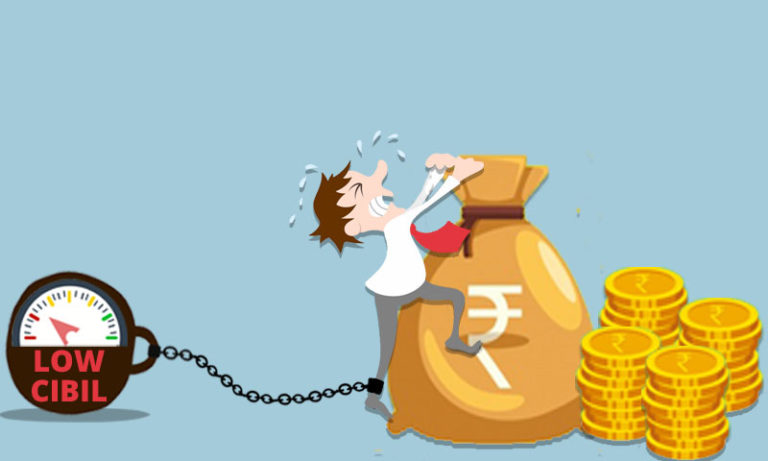
A CIBIL score is a three-digit number between 300 and 900 that summarises your credit report: how reliably you have repaid loans and cards, how much of your available credit you use, how long you have been borrowing, the mix of credit you hold and how often you have applied recently. TransUnion CIBIL is the best known of India’s four credit bureaus; Experian, Equifax and CRIF High Mark calculate their own scores from similar data.
For a lender, especially on an unsecured personal loan where there is no collateral, your score is the quickest signal of one question: if we lend to this person, how likely are we to be repaid on time? Everything else follows from the answer.
The three decisions your score drives
1. Approval
Many lenders use a minimum score as a first filter. Below it, an automated system may reject the application before a person sees it. Above it, you move on to income and document checks.
2. Interest rate
Lenders price for risk. A higher score usually means a lower rate, because the expected losses on that group of borrowers are lower. Two people borrowing the same amount can pay very different rates.
3. Amount and tenure
A strong score can unlock a larger amount and a longer repayment period. A weaker one may get a smaller loan, a shorter tenure, or a request for a co-applicant.
To see which score ranges different kinds of lenders typically look for, read what credit score you need for a personal loan.
What a lower score can cost you, in rupees
The rate difference is where a score quietly costs the most. Take one loan of ₹3,00,000 over 36 months and price it at four different rates, the kind of spread borrowers can see depending on their credit profile.
Total interest on ₹3 lakh over 36 months
Illustrative rates chosen to show the effect of pricing, not quotes from any lender and not Omozing’s pricing. Reducing-balance EMI, interest only; processing fees and GST excluded. Your actual rate, fees and APR appear in the Key Fact Statement before you sign.
| Illustrative rate | Monthly EMI | Total interest | Extra vs 12% |
|---|---|---|---|
| 12% a year | ₹9,964 | ₹58,715 | — |
| 16% a year | ₹10,547 | ₹79,696 | ₹20,981 |
| 22% a year | ₹11,457 | ₹1,12,457 | ₹53,742 |
| 28% a year | ₹12,409 | ₹1,46,727 | ₹88,012 |
The gap between the best and the weakest profile here is about ₹88,000 on the same ₹3 lakh, roughly 29% of the amount borrowed. A higher EMI also eats into how much more you can borrow later, because lenders check how much of your salary already goes to EMIs.
A better score doesn’t just get you a “yes”. It gets you a cheaper yes.
What lenders look at besides the score
- Income and stability. Take-home salary, how long you have been with your employer and how regularly salary credits land in your bank account.
- Existing EMIs. The share of your income already committed to repayments. A high score with too many EMIs can still be declined.
- The story behind the number. A score of 650 caused by one old, cleared delay is very different from 650 with an active overdue. A human reviewer can tell the difference; an automated cut-off often can’t.
- Recent enquiries. Several applications in a few weeks can look like credit hunger, even with a good score.
- Short-term app loans. Many small app loans in your report suggest cash-flow stress. See how payday loans affect your finances.
If your score isn’t where you want it
Read the report, not just the score
You are entitled to one free full report from each bureau every calendar year. Check every account for errors and dispute anything wrong through CIBIL dispute resolution.
Fix the fast levers
Clear overdues and bring card utilisation under about 30% before you apply. Our guide on what can raise your score fast explains what moves within a cycle or two.
Apply to the right lender, once
Choose a lender whose criteria fit your profile instead of applying everywhere. Each application adds a hard enquiry.
Consider a co-applicant
A spouse or family member with a strong record and income can improve the terms. Read how co-applicants help.
How Omozing uses your score
Omozing, the digital lending brand of RBI-registered NBFC Aparampaar Finance, considers salaried applicants with a credit score from 600 and take-home pay of ₹40,000 a month or more. The score gets you in the door; after that, a credit officer reads your full report to understand what is behind it. Loans go up to ₹25 lakh over 3 to 36 months, rates start from 11% a year, and the exact rate, fees and APR are in your Key Fact Statement before you sign.
Score between 600 and 750?
See how we assess mid-range scores and check if you qualify with just two documents.
Frequently asked questions
Why is the CIBIL score important for a personal loan?
A personal loan is usually unsecured, so the lender relies heavily on your repayment record. Your score helps decide whether you are approved, what interest rate you are offered and how much you can borrow.
What CIBIL score is needed for a loan?
It varies by lender. Many banks prefer 750 or more for their best rates, while some NBFCs consider lower scores. Omozing considers salaried applicants from a score of 600, with a credit officer reviewing the full report.
Does a higher CIBIL score get a lower interest rate?
Usually, yes. Lenders price loans by risk, so a stronger score generally qualifies for lower rates. Income, existing EMIs and employer also affect the final rate.
Can I get a loan with a good score but low income?
A good score alone may not be enough. Lenders also check whether your income can comfortably cover the new EMI alongside existing ones. A co-applicant with income can help.
Does applying for a loan reduce my CIBIL score?
A loan application creates a hard enquiry, which can lower your score slightly for a while. Several applications in a short period have a bigger effect, so apply selectively.
Is CIBIL the only score lenders check?
No. Lenders may check reports from TransUnion CIBIL, Experian, Equifax or CRIF High Mark. Scores can differ slightly between bureaus because each uses its own model.
Omozing is the digital lending brand of Aparampaar Finance Private Limited, an RBI-registered non-deposit-taking NBFC. Loans are subject to credit assessment. See our regulatory disclosures and grievance redressal process.